
What Is Dainty Jewellery?
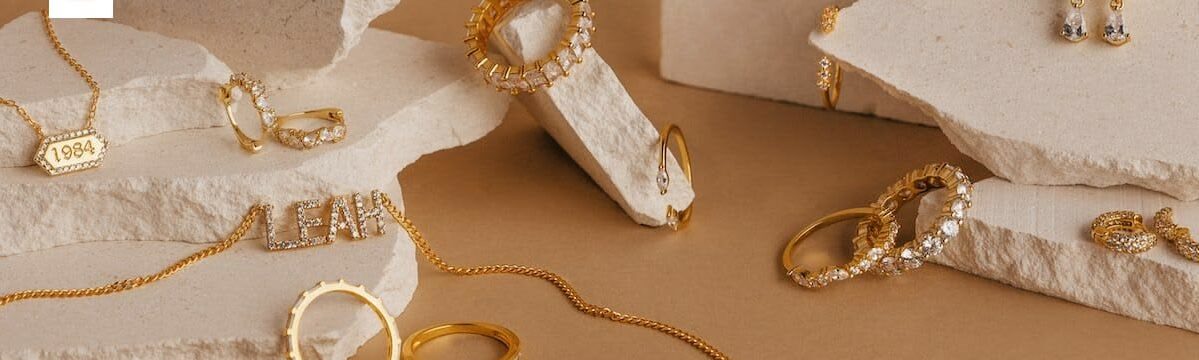
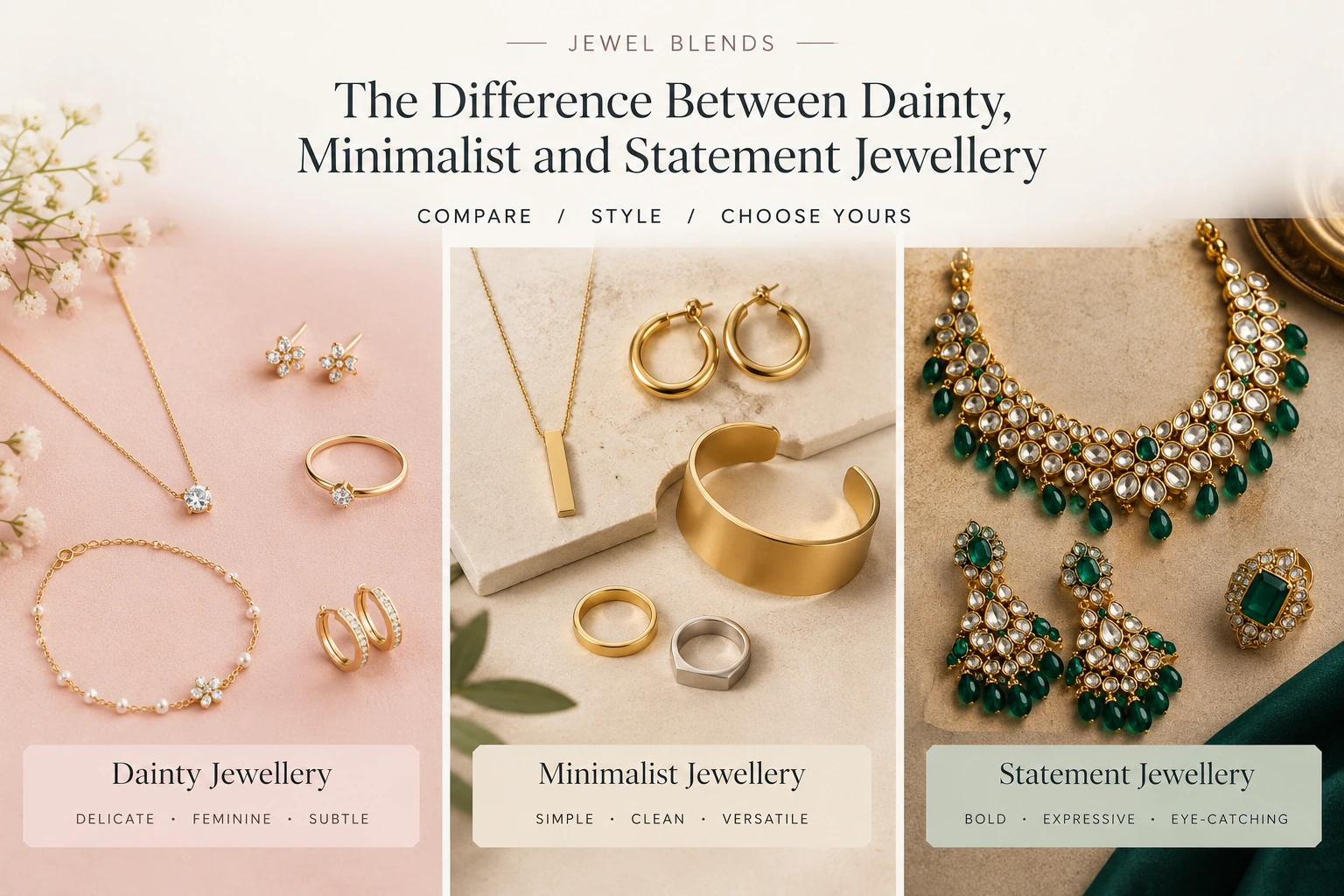
Dainty jewellery refers to jewellery characterised by its small size, delicate construction, lightweight appearance, and fine details. It often features thin chains, tiny pendants, petite gemstones, subtle charms, and slim bands.
The primary appeal of dainty jewellery lies in its understated beauty. Instead of dominating an outfit, these pieces add a gentle finishing touch that enhances your overall appearance without overwhelming it.
For example, a fine gold chain with a tiny heart pendant, a pair of small gemstone studs, or a thin ring with a miniature stone can all be considered dainty jewellery.
Key Characteristics of Dainty Jewellery
1. Small and delicate designs
Dainty pieces are usually compact and visually light. They often feature tiny pendants, miniature charms, fine chains, and slender ring bands.
2. Fine detailing
Small decorative elements such as pearls, coloured gemstones, miniature flowers, stars, hearts, and subtle motifs are common in dainty jewellery.
3. Lightweight appearance
These pieces generally have a light, delicate look. Their appearance makes them suitable for everyday styling and comfortable, uncomplicated outfits.
4. Soft and feminine aesthetics
Dainty jewellery is often associated with romantic, graceful, and elegant styling. However, it can suit anyone who prefers subtle accessories, regardless of gender or personal aesthetic.
5. Easy everyday styling
Small necklaces, tiny hoops, delicate bracelets, and fine rings can complement office outfits, casual wear, college clothing, and occasion wear.
Popular Types of Dainty Jewellery
- Fine gold-plated necklaces with tiny pendants
- Minimal gemstone studs
- Thin stacking rings
- Delicate chain bracelets
- Petite pearl earrings
- Fine anklets
- Small charm necklaces
- Tiny floral or celestial jewellery
Dainty jewellery is especially appealing to people who enjoy subtle accessories that can be worn repeatedly without feeling too elaborate.
What Outfits Look Best with Dainty Jewellery?
Dainty jewellery pairs beautifully with simple, relaxed, and polished outfits.
Casual outfits: A small pendant necklace with a white T-shirt and jeans creates an effortless everyday look.
Office wear: Fine stud earrings, a delicate bracelet, and a slim ring complement formal shirts, tailored trousers, and blazers.
Ethnic wear: Tiny jhumkas, delicate chains, and subtle gemstone earrings can complement kurtis, cotton suits, and understated sarees.
Romantic outfits: Small pearl earrings or a fine necklace pair beautifully with floral dresses, pastel outfits, and soft fabrics.
Summer styling: Lightweight necklaces and anklets work well with linen clothing, sundresses, and simple tops.
The secret to styling dainty jewellery is to let its delicate details complement your outfit rather than compete with it.
What Is Minimalist Jewellery?
Minimalist jewellery focuses on simplicity, clean lines, intentional design, and the absence of unnecessary decoration. Rather than relying on elaborate details, minimalist pieces create visual interest through their shape, proportion, material, and finish.
A minimalist necklace might feature a simple geometric pendant, while minimalist earrings could consist of sleek hoops or smooth metal studs.
An important distinction in the dainty vs minimalist jewellery comparison is that dainty jewellery describes a delicate appearance, whereas minimalist jewellery describes a design approach.
This means minimalist jewellery does not necessarily have to be tiny or extremely thin. A thick, smooth gold-toned cuff bracelet or a sculptural silver ring can still be minimalist if its design is clean and uncluttered.
Key Characteristics of Minimalist Jewellery
1. Clean lines and simple shapes
Minimalist jewellery frequently uses circles, rectangles, straight lines, smooth curves, and geometric forms.
2. Limited decoration
These designs avoid excessive embellishment. Instead, their beauty comes from their structure and carefully considered proportions.
3. Versatility
Minimalist pieces are often easy to coordinate with different outfits, making them practical additions to a capsule wardrobe.
4. Timeless appeal
Simple hoops, plain bands, and geometric pendants can remain relevant across changing fashion trends.
5. Focus on form and material
Metal finishes, proportions, textures, and silhouettes play a significant role in minimalist design.
Popular Minimalist Jewellery Styles
- Plain gold-toned or silver-toned hoops
- Geometric pendants
- Smooth cuff bracelets
- Simple chain necklaces
- Plain stacking bands
- Sleek huggie earrings
- Bar necklaces
- Sculptural rings
- Unembellished bangles
Minimalist jewellery is ideal for people who appreciate sophisticated accessories that work across multiple settings.
What Outfits Look Best with Minimalist Jewellery?
Minimalist jewellery works particularly well with structured clothing, monochromatic outfits, and modern silhouettes.
Office and business wear: Sleek hoops, a geometric pendant, and a smooth bracelet complement tailored suits and blazers.
Casual wear: A simple chain with a plain T-shirt and jeans creates a polished yet relaxed appearance.
Monochromatic outfits: Minimalist silver or gold-toned pieces add definition to black, white, beige, grey, and navy clothing.
Contemporary ethnic wear: Simple bangles, geometric earrings, and clean-lined necklaces pair well with modern kurtas, contemporary sarees, and understated fusion outfits.
Evening wear: Sculptural earrings or a bold but simple cuff can elevate a plain black dress without requiring multiple accessories.
If you prefer jewellery that looks refined, modern, and adaptable, minimalist designs are an excellent starting point.
What Is Statement Jewellery?
Statement jewellery is designed to stand out. It attracts attention through its size, colour, shape, intricate detailing, unusual construction, or dramatic visual impact.
Unlike dainty jewellery, which emphasises delicate details, or minimalist jewellery, which prioritises simplicity, statement jewellery makes an accessory a focal point of an outfit.
A pair of oversized earrings, a colourful gemstone necklace, a chunky bracelet, or a large cocktail ring can all be examples of statement jewellery.
Statement pieces do not necessarily need to be enormous. A uniquely shaped earring or an intricately designed necklace can make a statement because of its distinctive appearance.
Key Characteristics of Statement Jewellery
1. Eye-catching designs
Statement jewellery is intended to be noticed. It may feature dramatic silhouettes, unusual shapes, or elaborate embellishments.
2. Bold colours and materials
Colourful stones, contrasting metals, enamel, pearls, and textured finishes can make a piece more visually prominent.
3. Larger proportions
Many statement pieces use oversized earrings, chunky chains, broad cuffs, or large pendants.
4. Intricate craftsmanship
Traditional motifs, elaborate stonework, layered elements, and decorative detailing often contribute to the appeal of statement jewellery.
5. Strong personal expression
Statement accessories allow wearers to experiment with fashion, express individuality, and introduce personality into simple outfits.
Popular Types of Statement Jewellery
- Oversized hoops and chandelier earrings
- Chunky chain necklaces
- Large gemstone pendants
- Colourful cocktail rings
- Broad cuff bracelets
- Layered necklaces with prominent pendants
- Traditional kundan necklaces
- Elaborate meenakari earrings
- Sculptural designer jewellery
Statement jewellery is particularly useful when you want an accessory to become the highlight of your outfit.
What Outfits Look Best with Statement Jewellery?
Statement jewellery can transform basic clothing into a more expressive look.
Simple dresses: A bold necklace can add colour and visual interest to a plain dress.
Evening wear: Chandelier earrings or an elaborate bracelet can complement gowns and sleek party outfits.
Traditional Indian clothing: Kundan necklaces, meenakari earrings, and elaborate jhumkas can beautifully complement sarees, lehengas, and festive suits.
Monochromatic outfits: Colourful or sculptural accessories can introduce contrast to a simple black, white, or beige ensemble.
Contemporary fashion: Chunky chains and oversized earrings can pair well with oversized blazers, structured tops, and modern silhouettes.
When styling statement jewellery, allow the piece to take centre stage. You do not always need multiple bold accessories to create an impressive look.
Dainty vs Minimalist Jewellery vs Statement Jewellery: Key Differences
Although these three jewellery styles can sometimes overlap, they serve different aesthetic purposes.
| Feature | Dainty Jewellery | Minimalist Jewellery | Statement Jewellery |
|---|---|---|---|
| Main focus | Delicacy and fine details | Simplicity and clean design | Visual impact and individuality |
| Typical size | Small and delicate | Can be small, medium, or large | Often prominent or distinctive |
| Design | Tiny charms, fine chains, petite stones | Geometric shapes, smooth lines, simple forms | Bold shapes, elaborate details, striking colours |
| Visual effect | Soft and subtle | Clean and refined | Dramatic and eye-catching |
| Decoration | Small decorative accents | Limited embellishment | Often prominent embellishment or unusual forms |
| Everyday suitability | Excellent | Excellent | Depends on the piece and occasion |
| Layering approach | Fine, delicate layers | Structured, balanced combinations | Often best as a focal point |
| Ideal for | Subtle, graceful styling | Modern, versatile styling | Expressive, attention-grabbing styling |
| Example | Tiny gold pendant | Smooth geometric necklace | Large gemstone necklace |
The simplest way to remember the difference is that dainty jewellery is about delicacy, minimalist jewellery is about simplicity, and statement jewellery is about impact.
Dainty vs Minimalist Jewellery: Are They the Same?
This is one of the most common questions people ask when exploring delicate jewellery and minimalist jewellery styles.
The answer is no, although the two styles frequently overlap.
Dainty jewellery focuses on the physical appearance of a piece. It is generally small, fine, lightweight-looking, and delicate.
Minimalist jewellery focuses on the design philosophy. It removes unnecessary elements and emphasises simplicity, shape, and proportion.
Consider three necklaces:
- A fine chain with a tiny pearl is dainty because of its delicate appearance.
- A smooth, geometric pendant on a simple chain is minimalist because of its clean design.
- A chunky, polished metal necklace with a simple silhouette can also be minimalist, even though it is not dainty.
A necklace with a tiny geometric pendant could be both dainty and minimalist. Similarly, a fine necklace featuring a tiny, intricately decorated flower might be dainty without being strictly minimalist.
This distinction is useful when shopping for jewellery online. If you search for dainty jewellery, you are likely to find small and delicate designs. If you search for minimalist jewellery styles, you may discover a broader range of simple accessories, including substantial rings, cuffs, and necklaces.
Dainty vs Statement Jewellery: Which One Should You Choose?
Dainty and statement jewellery represent two different approaches to accessorising.
Dainty jewellery complements your outfit through subtle details, while statement jewellery draws attention to a particular part of your look.
Choose dainty jewellery if you:
- Prefer understated accessories.
- Want jewellery that works for everyday activities.
- Enjoy fine chains, small pendants, and petite gemstones.
- Like soft, romantic, or effortlessly polished outfits.
- Prefer wearing several delicate accessories together.
Choose statement jewellery if you:
- Enjoy experimenting with fashion.
- Want accessories that become the focal point of your outfit.
- Wear traditional clothing and festive ensembles frequently.
- Love bold colours, intricate details, or distinctive shapes.
- Want to make a simple outfit look more expressive.
You do not have to commit to one style. A delicate necklace can be perfect for a daytime outing, while a bold gemstone necklace can be more suitable for a celebration or evening event.
The best choice depends on your outfit, comfort, personal preferences, and the occasion.
Minimalist vs Statement Jewellery: Understanding the Contrast
Minimalist and statement jewellery may appear to be complete opposites, but both can be used to create sophisticated looks.
Minimalist jewellery relies on restrained design. Statement jewellery relies on visual emphasis.
For example, a smooth metal cuff with a simple silhouette may be minimalist even if it is relatively wide. An ornate cuff with colourful stones and intricate decorative motifs may be statement jewellery.
The difference is not always the size of the piece. It is also about how the design communicates visually.
When to Choose Minimalist Jewellery
Minimalist designs are useful for:
- Everyday office wear.
- Capsule wardrobes.
- Neutral and monochromatic outfits.
- Travel wardrobes where versatile accessories are helpful.
- People who prefer clean, contemporary aesthetics.
When to Choose Statement Jewellery
Statement pieces are useful for:
- Weddings and festive occasions.
- Parties and evening events.
- Traditional Indian outfits.
- Special celebrations.
- Adding personality to simple clothing.
For a balanced wardrobe, consider keeping a selection of minimalist essentials alongside a few distinctive statement pieces.
How to Layer Dainty, Minimalist and Statement Jewellery
Layering is a styling technique that combines multiple jewellery pieces to create a coordinated look. The best approach depends on the style of jewellery you choose.
1. Layering Dainty Jewellery
Dainty jewellery is particularly suitable for delicate layering because fine chains, small pendants, and slim necklaces can complement one another without creating excessive visual weight.
How to create a layered dainty look:
Start with a short chain close to the neckline. Add a slightly longer necklace with a small pendant, followed by another fine chain if you want more depth.
For example:
- A short plain gold-toned chain.
- A medium-length tiny heart pendant.
- A longer necklace with a petite gemstone.
Try to create visible differences in length so that each necklace remains distinct.
You can also combine slim rings, fine bracelets, and tiny hoops for a coordinated appearance.
Styling tip: If your necklaces keep tangling, try chains with more noticeable differences in length and weight. A necklace layering clasp may also help keep chains separated.
2. Layering Minimalist Jewellery
Minimalist layering works best when the pieces share a common design language.
You can combine smooth metal hoops, geometric pendants, plain bands, and simple bracelets while maintaining a clean and intentional appearance.
For example:
- Two necklaces with simple pendants of different lengths.
- A smooth cuff bracelet paired with a fine chain bracelet.
- Two plain rings with different widths.
- Small hoops combined with a simple ear cuff.
The objective is not to add as many accessories as possible. It is to create a balanced combination in which each piece contributes to the overall look.
Styling tip: Choose a common element, such as metal colour, geometric shape, or finish, to make your jewellery combination look cohesive.
3. Layering Statement Jewellery
Statement jewellery requires a slightly different approach because individual pieces can already have considerable visual impact.
Rather than layering several elaborate necklaces, choose one prominent accessory and complement it with simpler pieces.
For example, pair a chunky necklace with small earrings and a plain bracelet. If you wear oversized chandelier earrings, consider skipping a large necklace or choosing a very subtle chain.
For traditional Indian styling, a prominent kundan necklace can be paired with coordinated earrings, while other accessories remain relatively understated.
Styling tip: Think about where you want the viewer’s attention to go. One dominant accessory often creates a more intentional appearance than several competing focal points.
Can You Mix All Three Jewellery Styles?
Absolutely. Combining dainty, minimalist, and statement jewellery can produce an interesting and personalised look.
For example, you could wear a bold statement ring with a delicate bracelet and simple geometric earrings.
Another combination might include a minimalist chain necklace, tiny stud earrings, and an ornate cocktail ring.
The key is to establish a visual hierarchy. Decide which accessory should stand out, then choose the remaining pieces to support it.
How to Choose the Right Jewellery Style for Your Lifestyle
Choosing between dainty, minimalist, and statement jewellery becomes easier when you consider how you dress, where you spend your time, and how you want your accessories to function.
1. Consider Your Daily Routine
If you spend most of your day studying, working in an office, or running errands, dainty and minimalist jewellery can be practical options.
Small earrings, simple necklaces, and smooth rings often work well with everyday outfits.
If you regularly attend celebrations, social events, or festive gatherings, a collection of statement pieces may be especially useful.
Consider comfort, snagging risks, and any workplace or activity-specific restrictions when choosing jewellery for daily use.
2. Think About Your Personal Style
Your preferred clothing aesthetic can help you determine which jewellery style feels most natural.
Romantic and soft: Dainty necklaces, small pearls, and delicate floral motifs.
Modern and understated: Minimalist hoops, geometric pendants, and smooth metal bands.
Bold and expressive: Oversized earrings, chunky chains, colourful gemstones, and elaborate designs.
Traditional and festive: Kundan, meenakari, intricate earrings, and embellished necklaces.
Bohemian and relaxed: Layered chains, textured metal pieces, charms, and mixed materials.
These are styling suggestions rather than strict rules. You can experiment with any combination that feels right for you.
3. Consider Your Wardrobe
Look at the colours, patterns, necklines, and silhouettes you wear most frequently.
If your wardrobe contains neutral colours and simple cuts, statement jewellery can introduce contrast and personality.
If your clothing already includes bold prints, elaborate embroidery, or prominent details, dainty or minimalist accessories may create a more balanced look.
For example, a heavily embroidered kurta might work beautifully with simple earrings, while a plain black dress could be enhanced by an elaborate necklace.
4. Choose Jewellery According to the Occasion
Different occasions may call for different styling approaches.
| Occasion | Suggested Jewellery Style |
|---|---|
| College or everyday errands | Dainty |
| Office or professional meetings | Minimalist |
| Casual brunch | Dainty or minimalist |
| Dinner date | Dainty or minimalist, with an optional focal piece |
| Wedding celebration | Statement |
| Festive family gathering | Statement or a balanced mix |
| Travel | Lightweight dainty or minimalist |
| Evening party | Statement or sculptural minimalist |
These are general recommendations, not fixed rules. A simple necklace can work at a celebration, and a statement ring can be appropriate for an ordinary day if it suits your preferences.
5. Consider Comfort and Maintenance
Your jewellery should suit your practical needs as well as your aesthetic preferences.
Fine chains may require careful handling to avoid tangling or breaking. Intricate pieces may need more attention when cleaning and storing. Large earrings can feel uncomfortable during extended wear, depending on their weight and construction.
If you have sensitive skin, pay attention to the metals and coatings used in your jewellery. Product descriptions can help you identify materials, although terms such as gold-plated or hypoallergenic should not automatically be treated as a guarantee of suitability for everyone.
Choosing well-made pieces and storing them properly can help preserve their appearance over time.
Building a Jewellery Collection That Includes All Three Styles
You do not need an extensive jewellery collection to enjoy different aesthetics. A thoughtfully selected group of pieces can cover everyday styling, professional outfits, and special occasions.
Here is a practical starting point.
Essential Dainty Jewellery
Consider adding:
- One fine everyday necklace.
- A pair of small studs or petite hoops.
- A delicate bracelet.
- One or two slim rings.
- A fine anklet if it suits your wardrobe.
These pieces can serve as your everyday foundation.
Essential Minimalist Jewellery
Consider adding:
- A pair of classic hoops.
- A simple pendant necklace.
- A smooth bracelet or cuff.
- Plain rings in complementary finishes.
- A clean-lined pair of earrings for formal outfits.
These accessories can work across casual and professional settings.
Essential Statement Jewellery
Consider adding:
- One bold necklace.
- A pair of distinctive earrings.
- A prominent cocktail ring.
- A decorative cuff or bracelet.
- A traditional or colourful piece for festive occasions.
You can select statement pieces that complement the colours and silhouettes already present in your wardrobe.
Should You Invest in One Style First?
If you are starting your jewellery collection, begin with the pieces you will wear most often.
For someone who prefers subtle, everyday accessories, dainty jewellery may be the most useful starting point. If your wardrobe consists of clean silhouettes and neutral colours, minimalist jewellery can provide excellent versatility.
If you regularly wear traditional outfits or enjoy dressing up for occasions, a statement necklace or pair of distinctive earrings may offer more immediate value.
Rather than purchasing every trend, prioritise designs that fit your existing wardrobe and personal style.
Common Mistakes to Avoid When Styling Jewellery
Even beautiful jewellery can look less cohesive if it does not complement the overall outfit. Avoiding a few common mistakes can help you create more intentional combinations.
1. Assuming Dainty and Minimalist Mean the Same Thing
Although the styles overlap, a delicate design is not automatically minimalist, and a minimalist design does not have to be delicate.
Understanding this distinction helps you choose pieces that match the aesthetic you actually want.
2. Wearing Too Many Statement Pieces at Once
There is no universal rule against bold accessories, but multiple elaborate pieces can compete for attention.
If you are unsure how to combine them, begin with one prominent accessory and add simpler complementary pieces.
3. Ignoring Necklines
Necklines influence how necklaces sit and how visible they appear.
A short necklace can work well with an open neckline, while a longer pendant may create a useful vertical line with a simple top. High-neck clothing can sometimes look better with earrings or bracelets as the main accessories.
Experiment with proportions rather than following rigid rules.
4. Choosing Jewellery Only Because It Is Trending
Fashion trends change, but jewellery that complements your lifestyle and wardrobe can remain useful for much longer.
Choose trends that genuinely appeal to you instead of purchasing pieces simply because they are popular.
5. Overlooking Quality and Care
A jewellery piece’s appearance is only one part of the purchasing decision. Consider its material, construction, fastening, care instructions, and suitability for your intended use.
Proper storage and gentle cleaning can help extend the life of many jewellery pieces.
